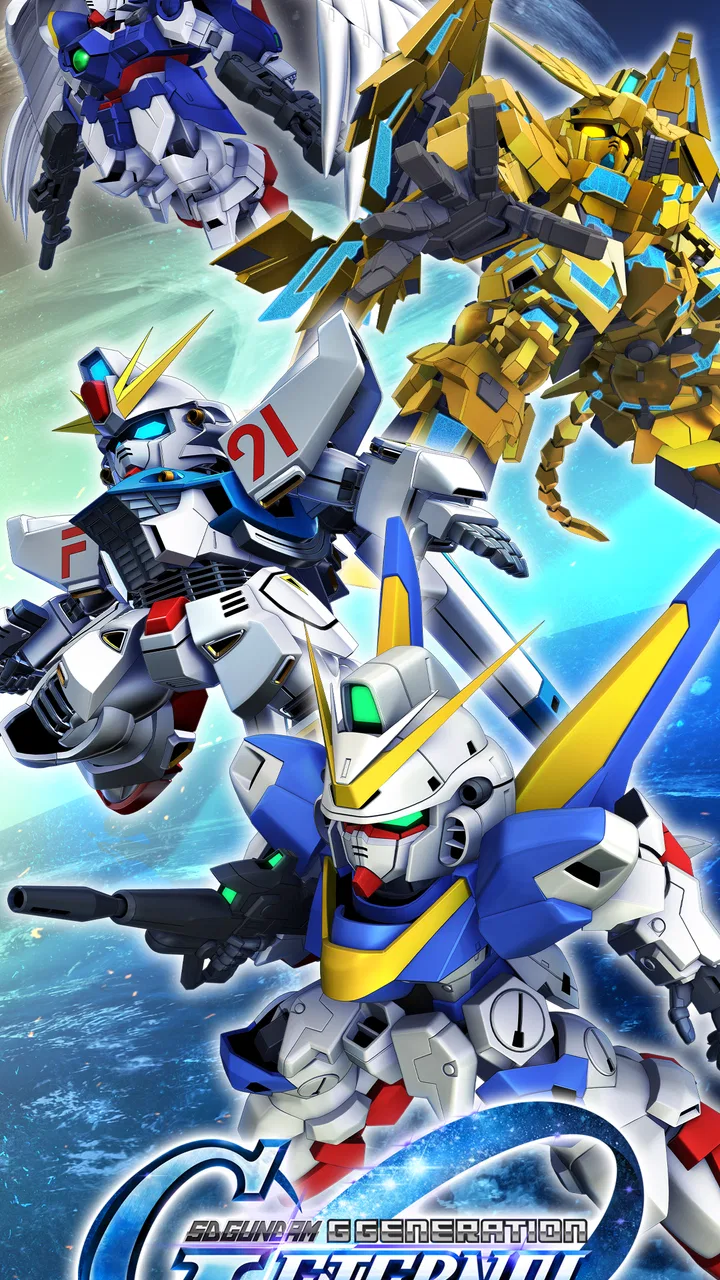
SD Gundam G Generation ETERNAL
- 4.5
- Rating
- 1.00M
- Installs
- Free
- Price

 Analysis by App-foxy
SD Gundam G Generation ETERNAL is the kind of mobile game I would suggest to someone who enjoys building a roster of familiar mechs and thinking carefully about how each unit works together. It is a free simulation game from Bandai Namco Entertainment Inc., built around the Gundam universe rather than around quick, disposable matches. My first impression was that it wants me to make decisions, not simply tap through battles while the game does everything for me.
That distinction matters when choosing a mobile game. If you want a short action game that rewards reflexes, this is probably not the best direction. If you like managing units, comparing upgrades, and gradually shaping a team from a large science-fiction setting, it has a much stronger case. The game is rated Mature 17+, so it is also aimed at an older audience rather than children looking for a simple cartoon strategy title.
Its average rating sits at 4.5 from around 117 thousand ratings, and it has passed one million installs. Those figures suggest that the game has found a substantial audience, but they do not tell me whether it suits every Gundam fan. The more useful question is how much I enjoy planning around a collection of mobile suits, and whether I am comfortable with the slower rhythm and optional spending that come with this type of experience.
You May Also Like

 Blood Strike: 2.5 Anniversary
Blood Strike’s Loadouts Turn Every Drop Into a Tactical Gamble
A close look at Blood Strike’s custom loadouts: how fast access to signature weapons reshapes its battle royale rhythm, rewards preparation, and narrows the gap between fights.

 Pandora - Music & Podcasts
Pandora’s Music Is Easy to Start, but Harder to Recover
Pandora’s strength is its low-effort path from a seed to a station. Its weak spot is how much confidence it asks you to place in connection, setup, and quiet recovery.

 8 Ball Pool
 Is Built on Rivalries, Rematches, and Routine
A close look at the rivalries, rematches, shared routines, and unanswered safety questions that turn a quick pool match into a persistent mobile community.

 Samsung Music
’s Quiet Strength Is Playing What You Already Own
Its reach comes less from spectacle than from dependable access to a personal library. That simplicity is both the app’s strongest retention engine and its ceiling.

 AccuWeather: Weather Radar
AccuWeather Review: A Quick, Clear Forecast for Everyday Decisions
For everyday plans, the best forecast is the one you can understand quickly. AccuWeather makes rain timing, radar, and local conditions easy to act on, with a few trade-offs.

 Hill Climb Racing
Why Hill Climb Racing Still Turns Crashes Into One More Run
A tiny car, a bumpy hill and one more upgrade: Hill Climb Racing keeps resurfacing because its simple chaos makes every near-miss feel personal.
More From Our News Desk



What to consider before choosing it
The first decision is whether I want a Gundam simulation game or a more direct combat experience. In ETERNAL, the appeal comes from assembling a force and using it intelligently. That makes every new unit feel like a strategic possibility rather than just another visual reward. I spend time considering where a machine belongs, which upgrades are worth pursuing, and how a change to one part of the roster affects the whole group.
This is a good fit for players who enjoy a gradual sense of ownership. I do not need to be an expert on every Gundam series to appreciate the structure, although existing familiarity makes the roster and setting more enjoyable. The game gives fans a reason to revisit machines they already recognize while still asking them to think about practical battlefield roles.
The second decision is how much patience I have for progression. Simulation games often become more interesting as the number of choices grows, but that also means the opening hours can feel like preparation. I have to accept that improving a team is part of the entertainment, not an obstacle placed between me and the “real” game. Anyone who dislikes menus, resource decisions, or repeating development tasks may find that rhythm tiring.
The third decision concerns spending. The game is free to download, while its in-app purchases range from $0.99 to $64.99 per item. I can begin without paying, which makes trying the core experience straightforward, but the presence of purchases means I should decide early how I want to play. I personally prefer treating purchases as optional support rather than as a shortcut I need in order to enjoy the game.
How the game feels in everyday use
A realistic use case is a short evening session after work or school. I might have enough time for a few battles, then use the remaining minutes to review my roster and prepare the next improvement. That works better here than expecting a long uninterrupted sitting. The game’s appeal is in making several small decisions over time: choosing which unit deserves attention, checking whether a new addition changes my formation, and deciding whether a resource is more valuable now or later.
I also see it fitting a weekend routine for a Gundam fan who likes to set a small goal. Instead of trying to overhaul everything at once, I can focus on strengthening one part of the team or learning how a particular machine contributes. That approach reduces the feeling of being buried under a collection system and makes progress easier to judge.
One practical tip is to avoid upgrading every unit simply because the option is available. In a roster-focused game, spreading resources too thin can make the whole team look busy without making it meaningfully stronger. I get more value by identifying the units I actually use and treating new additions as reasons to reconsider the lineup, not automatic replacements.
Why its Gundam identity matters
The licensed setting is not just decoration. It changes the emotional value of the decisions. A generic strategy game may give me interchangeable robots, while this one connects roster building with machines and characters that already carry meaning for fans. That makes experimentation more personal: trying a different formation can feel like exploring an alternate version of a familiar universe.
At the same time, the Gundam branding should not be the only reason to install it. Recognition may get me through the first session, but the long-term appeal depends on whether I enjoy the underlying simulation loop. Someone who knows the franchise but dislikes collection management may still lose interest. Conversely, a player who enjoys tactical roster games may find enough depth even without knowing every reference.
My advice is to judge the game by the decisions it asks me to make, not just by the machines shown on the screen. The strongest reason to stay is the relationship between the roster and the planning. The weakest reason is installing it only to look at familiar designs without wanting to manage a team.
Where it wins against familiar alternatives
Compared with a typical action-oriented mech game, ETERNAL wins when I want preparation to matter as much as execution. I am not relying only on quick reactions or direct control. The satisfaction comes from understanding my available force and making a sensible plan before the fight develops. That gives the game a calmer, more deliberate personality.
It also has an advantage over a generic robot collector because the Gundam setting gives the collection a clear identity. New units are not merely statistical objects. They belong to a recognizable world, and that makes roster decisions more memorable. For fans, this can turn routine development into a form of personal curation: I am building the team I want to see, not just chasing the highest-looking number.
Another strength is the way the simulation category supports flexible play. I can approach a challenge by changing my preparation rather than assuming that better reflexes will solve everything. That is particularly appealing on a phone, where I may want a game that lets me think at my own pace. I do not need the same physical focus demanded by an action title, so it is easier to fit into a relaxed session.
The game also rewards paying attention to the roster as a system. A unit that seems less impressive at first may become useful when it fills a specific need. This is one of the less obvious pleasures of the format: I learn to ask what a machine contributes instead of judging it only by its appearance or reputation. That mindset makes the collection feel more interactive and gives me a reason to revisit earlier choices.
Small habits that improve the experience
I recommend keeping a simple mental shortlist of the machines I genuinely want to develop. Without that discipline, collection games can encourage constant switching. A new unit appears, I invest in it, then another arrives and the previous investment becomes harder to justify. Focusing on a core group makes progress feel clearer and helps me notice when a new machine truly changes my options.
I also find it useful to separate “testing” from “committing.” A new unit can be tried in a low-pressure situation before I spend heavily on it. That prevents the common mistake of investing based on excitement alone. In a Gundam game, familiarity can make a machine feel essential before I have learned whether it fits my preferred approach.
Finally, I would not rush through the management screens. They are easy to treat as chores, but they are where much of the game’s identity sits. If I only want to press through battles, I miss the part that distinguishes this from a more straightforward mobile action game.
Where another type of game may fit better
There are clear situations in which I would choose something else. If my priority is immediate mech combat, a dedicated action game is likely a better match. I would rather have direct movement, rapid attacks, and constant input than spend time comparing a roster. ETERNAL is not the choice I would make for a quick adrenaline hit.
I would also look elsewhere if I wanted a purely casual game with almost no long-term planning. The simulation structure asks me to remember what I am developing and why. That can be rewarding, but it introduces mental overhead. A lighter puzzle or arcade game may be more satisfying when I only have a few minutes and do not want to think about progression.
Players who dislike collection-focused monetization should approach carefully. The free entry is convenient, but purchases can influence how tempting it feels to accelerate progress or pursue more options. I do not consider that automatically a reason to avoid the game, yet I would set a personal spending boundary before getting attached to the roster. That is especially important for anyone who tends to make impulse purchases after a difficult stage.
The Mature 17+ rating is another practical consideration for households. I would not treat this as a general-audience game simply because it features stylized robots. Parents choosing a mobile title for younger players should select something with a more suitable age classification instead.
There is also a knowledge trade-off. Fans of Gundam will probably get more emotional value from the roster and setting. Newcomers can still enjoy the simulation side, but the game may not provide the same immediate connection. If I want a completely self-contained strategy world with no prior attachment, an original simulation game may be easier to enter.
The cost of changing from another mobile game
Switching to ETERNAL has a time cost even though the download itself is free. I need to learn its menus, understand how its development choices work, and become comfortable with the pace of building a team. That learning period is worthwhile for a player who enjoys systems, but it is not ideal if I want instant familiarity.
There is also a habit cost. Action games train me to focus on moment-to-moment control, while this game encourages me to think before and between battles. Moving from one style to the other can feel slower at first. I would give it several focused sessions rather than judging it after a few minutes, but I would not force myself to continue if the preparation loop already feels like work.
My best switching strategy is to begin with a clear objective. I might decide to learn the roster screens first, then test how team changes affect battles, and only afterward think about purchases. This order keeps the early experience about understanding the game rather than reacting to every offer or reward. It also helps me discover whether I enjoy the core loop before investing money.
For players coming from another Gundam title, the biggest adjustment may be expectations. Familiar machines do not guarantee familiar gameplay. I should approach ETERNAL as a simulation experience with Gundam presentation, not assume it will reproduce the controls or pacing of an action-focused entry.
Performance, access, and long-term appeal
The current version is 2.5.3, and the game can run on Android 8.0 or later. That makes it accessible across a broad range of Android devices, although my real experience would still depend on the phone’s age, available storage, and general performance. I would keep the system updated and make sure there is comfortable free space before beginning a collection-heavy game.
Because the game is free, installation is an easy way to test whether the simulation loop suits me. I do not have to make a purchase before learning how the roster and battles feel. The important discipline is to treat the first sessions as an evaluation period: do I enjoy planning, or am I only staying because I recognize the franchise?
The long-term question is whether the game continues to give my decisions meaning. A strong collection game makes me reconsider my team as it grows. A weaker experience can turn into routine maintenance, where I repeat the same actions without feeling more involved. My enjoyment depends on whether new options encourage experimentation rather than simply adding more screens to manage.
I also appreciate that the game can serve different kinds of Gundam fans. A completion-minded player may enjoy building a broad roster, while another person may prefer developing a smaller group of favorites. I would not assume that one “correct” collection style exists. The better approach is to choose a goal that matches my patience and avoid comparing my progress with players who spend more time or money.
My recommendation after weighing the trade-offs
I recommend SD Gundam G Generation ETERNAL to Gundam fans who enjoy simulation games, roster planning, and gradual development. Its strongest quality is the way the recognizable setting gives weight to strategic choices. I feel more invested in deciding how to use a machine when that machine belongs to a universe I already care about.
I would also recommend it to mobile players who want a thoughtful alternative to reflex-heavy mech games. The free price makes trying it simple, and the 4.5 average from a large audience indicates that many players have responded positively to its overall approach. I would still keep the purchase range in mind and decide on a spending limit before the collection aspect becomes emotionally persuasive.
I would skip it if I want nonstop action, a very simple casual loop, or a game designed for younger players. I would also skip it if managing a growing roster feels more like administration than entertainment. In those cases, a direct combat game or a lighter arcade experience would serve me better.
For everyone else, my suggestion is to begin slowly. Learn how the team-building decisions affect play, develop a small group instead of spreading resources everywhere, and test new machines before committing heavily. The right reason to keep playing is that you enjoy shaping the force, not merely collecting it.
That is ultimately where I land: this is a worthwhile free simulation game for the specific player it is designed to attract. Bandai Namco Entertainment Inc. has built an experience that uses Gundam recognition to support a deliberate management loop, rather than replacing that loop with spectacle alone. If that combination sounds appealing, ETERNAL is easy to try and has enough structure to become a regular part of a mobile gaming routine. If I need immediate action or minimal commitment, I would choose a different category without hesitation.
FAQs for SD Gundam G Generation ETERNAL
01What is SD Gundam G Generation ETERNAL?
SD Gundam G Generation ETERNAL is a mobile strategy RPG built around the long-running Gundam universe. It brings together characters, mobile suits, story moments, and battles from multiple Gundam series. Players create teams, develop units, and fight turn-based tactical battles on grid-based maps. It is designed for fans who enjoy collecting Gundam content as well as planning attacks and managing a squad over time.
02How does the gameplay work in SD Gundam G Generation ETERNAL?
The game combines tactical, turn-based combat with character and mobile suit progression. Before each battle, you select units and organize your team according to their abilities, range, movement, and compatibility with the mission. During combat, positioning and target selection are important because different weapons and skills work better in specific situations. Outside battles, you can upgrade units, strengthen pilots, and develop your roster.
03Does SD Gundam G Generation ETERNAL include characters and mobile suits from different Gundam series?
Yes, one of the main attractions is its crossover structure. SD Gundam G Generation ETERNAL features content inspired by several Gundam timelines and productions, allowing players to collect familiar mobile suits, pilots, and story-related characters in one game. The exact available content can vary by region, updates, and events, so players should check the current version and official announcements for the latest additions.
04Is SD Gundam G Generation ETERNAL free to download and play?
The game is generally offered as a free-to-play mobile title, which means you can download it without paying an upfront purchase price. However, it may include optional in-app purchases for items such as currency, summons, upgrade materials, or limited-time bundles. Progress can also depend on daily activity, resource management, and event participation. Parents and players should review purchase settings before allowing transactions.
05Can beginners enjoy SD Gundam G Generation ETERNAL, or is it mainly for experienced Gundam fans?
Beginners can enjoy the game because its early missions usually introduce the basic systems, including team formation, movement, attacks, upgrades, and progression. Nevertheless, familiarity with Gundam can make the large cast and crossover references more rewarding. New players should avoid spending resources too quickly, learn each unit’s role, and focus on building a balanced team instead of upgrading every mobile suit equally.
Pros
- Faithful Gundam roster with units and pilots from many series.
- Strategic grid battles reward careful positioning and team composition.
- Story stages offer fan-service moments and recognizable mobile suits.
- Regular events provide extra missions
- rewards
- and limited-time content.
- Unit upgrades and customization create long-term progression goals.
Cons
- Gacha recruitment can make obtaining favorite units unpredictable.
- Progress may slow considerably without spending or saving resources carefully.
- Large rosters can make managing upgrades and teams feel time-consuming.
- Some missions may favor specific units
- limiting creative team choices.
- Online features and updates require a stable internet connection.

SD Gundam G Generation ETERNAL
Gallery